





To Keep a Republic
Enlightened Self-Interest Is Not Enough
After giving a college lecture on the American Founding one day, I was approached by a baffled student who asked what I had meant when I mentioned the “common good.” None of her government teachers had ever mentioned such a thing, and she had never heard the expression before. All her life, she said, all of her teachers had told her that politics is by definition a pursuit of self-interest. Not that people often do pursue self-interest through political means—obviously true—but that its pursuit was all that politics is.
I was stunned. It wasn’t just that the term “common good” was new to her, although it was. It wasn’t just that she didn’t believe in the common good, although of course she couldn’t have. It was that no matter how I explained it, she was unable to grasp the concept. For her, St. Augustine’s question of how a government is different from a gang of thieves would have been incomprehensible. What else could it be?
It was almost as bizarre an experience as when, after I had lectured for several days on the Summa theologiae, a student asked me whether Thomas Aquinas believed in God.
Now, I am not one of those who think that political and economic life must be based on what New York Mayor Zohran Mamdani has called “the warmth of collectivism.” As William McGurn remarked recently in The Wall Street Journal (“J. D. Vance ‘Fixes’ Capitalism,” August 3, 2026), the opposite of competition isn’t cooperation; it’s collusion. Even Christ’s command to love our neighbors as ourselves presupposes that we love ourselves, instructing us to use this love to measure our treatment of others.
Two cheers, then, for self-interest. The fact is that, in a fallen world, though the supply of virtue may sometimes be a little more and sometimes a little less, there will never be enough of it to run everything on virtue alone. Ancient Sparta tried that. Not only were its notions of virtue abhorrent, not only was Sparta an oppressor, but when abstemious and highly disciplined Spartans were absent from Sparta, their behavior tended to fall to pieces.
Don’t our own constitutional traditions claim that it is possible to channel self-interest itself toward the common good? Well, yes. But if that is our goal, we had better know what we are getting into. It is a lot harder than it sounds. Explaining that is the purpose of this essay.
Shared Loves & Self-Interest
Reflecting on the history of Rome, Augustine explained how the self-interested love of glory, which in reality is a vice, could so closely ape a virtue that the Roman political classes thought it really was one. The reason it could imitate a virtue well enough to fool them is that, although I may have all sorts of other corrupt desires, my love of glory may be stronger still. Thus, just for the sake of being admired by others, I may suppress all those other corrupt desires and perform seemingly public-spirited deeds in the public square. I reform the constitution. Or I fix the aqueducts. Or I beat off an invading army. The underlying idea is that love of glory, which is a vice, may channel and direct even baser motives so that it gives rise to at least some of the behavior that true virtue would produce.
I would not want to give the impression that Augustine thought this was all fine and dandy. He was merely telling how it works. According to him, what unites any commonwealth in this fallen world isn’t a sense of justice but an agreement among the citizens about the objects of their love—or at least an agreement about them among the members of the political class. As he showed, glory is one possible shared love, but there can be others. For example, in his telling, earlier in Rome’s history the shared love that united the citizens and kept their baser loves in check was the love of liberty. By liberty he meant sheer independence: being their own masters, not being under the thumb of anyone else. That was what they craved. In the second stage of Rome’s history, this self-interested love of independence was replaced by the self-interested love of glory. Finally, in the third stage, it was replaced by the self-interested love of wealth and power, and once that happened, the republic collapsed, because those self-interested loves, he thought, couldn’t be channeled toward the common good at all.
Now, the sheer love of independence is no more a virtue than the sheer love of glory. However, it imitates a virtue well enough to have fooled a number of the founders of the American republic, too. In fact, they thought it was the most important motive in self-government. Alexander Hamilton, who thought the shared love of independence strongest in the business classes, pinned his political hopes on the leadership of the so-called gentlemen of the cities. Thomas Jefferson, who thought the shared love of independence strongest in the middle ranks of the farming classes, pinned his political hopes on the sons of the earth.
J. Budziszewski is Professor of Government, Philosophy, and Civic Leadership at the University of Texas at Austin, and the author of several books, including Pandemic of Lunacy: How to Think Clearly When Everyone Around You Seems Crazy (Creed & Culture, 2026).
A Journal of Mere Christianity—Delivered to Your Door
- Essays on theology, culture, and the Church
- Contributors from across the Christian traditions

Six print issues (one year) of Touchstone, plus full online access and PDF downloads for only $39.95.

Get a one-year full-access subscription to the Touchstone online archives for only $19.95.
bulk subscriptions
Order Touchstone subscriptions in bulk and save $10 per sub! Each subscription includes 6 issues of Touchstone plus full online access to touchstonemag.com—including archives, videos, and pdf downloads of recent issues for only $29.95 each! Great for churches or study groups.
Transactions will be processed on a secure server.
more on conference talk from the online archives

36.4—Jul/Aug 2023
Our Political Void & the Disintegration of Truth by Michael Hanby

more from the online archives
23.6—November/December 2010
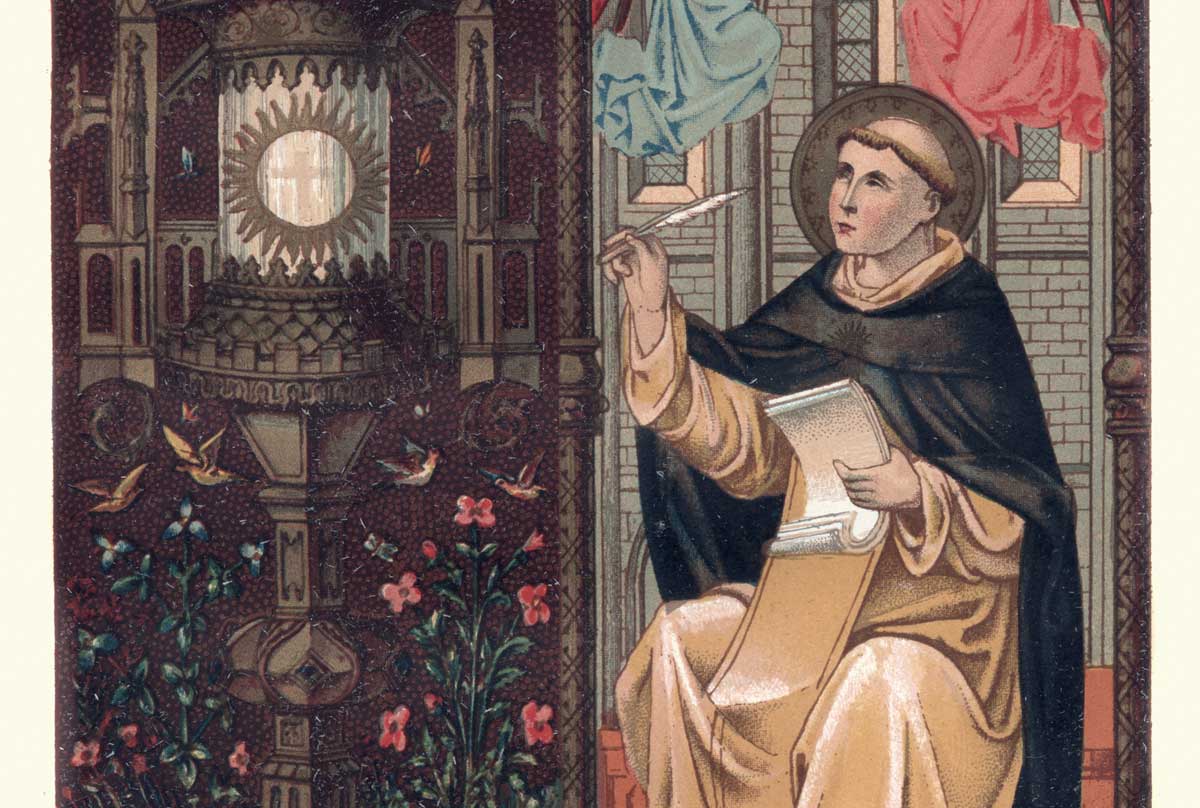
Darwin, Design & Thomas Aquinas
The Mythical Conflict Between Thomism & Intelligent Design by Logan Paul Gage

27.4—July/August 2014
The Bible, Sacred Theology & the Mind of Christ by Patrick Henry Reardon

31.6—November/December 2018
The Slow Vindication of Leon Podles by S. M. Hutchens
calling all readers
Please Donate
"There are magazines worth reading but few worth saving . . . Touchstone is just such a magazine."
—Alice von Hildebrand
"Here we do not concede one square millimeter of territory to falsehood, folly, contemporary sentimentality, or fashion. We speak the truth, and let God be our judge. . . . Touchstone is the one committedly Christian conservative journal."
—Anthony Esolen, Touchstone senior editor
