






Whence the Magi?
on Prefigurations of Christ in Ancient Persia
As a child, I was fascinated by the biblical Magi. At Christmastime they stood at the front of our church, greeting the Christ-Child in the makeshift stable allotted to them for a few weeks each year. Their unusual presentation, with red physician caps and astrolabes in hand, struck me as exotic and mysterious. In the world of my parochial Catholic school, however, they were given little explanation beyond the familiar line that they “came from the East to Jerusalem” (Matt. 2:1); that was the full extent of their backstory. And perhaps rightly so: even in the higher realms of collegiate education, there was little more to be said about them beyond a vague allusion to ancient Persia and some long-forgotten religion buried deep in antiquity.
In due course, this came to feel to me like a tremendous missed opportunity—not only for understanding Matthew’s Gospel but also for appreciating the prefigurations of Christ that existed outside the Hebrew Scriptures. Who were these strange men? Why is their occupation as astrologers permitted and even implicitly validated by the evangelist, when astrology is elsewhere condemned (Lev. 19:31; Deut. 18:10–14; Is. 47:13–14)? And how common was it, in the ancient world, for such figures to travel in response to alleged celestial events?
The Magi
An explanation, for the unfamiliar, of the term Magi: It is a precise one, unrelated to kingship or the more generic designation “wise men” that is commonly used. At the time of Christ, the Magi were the priestly class of Persia, adherents of the religion generally known as Zoroastrianism. Founded deep in antiquity by the ancient prophet Zoroaster, this faith affirmed the sovereignty of one supreme God, the moral struggle between good and evil, a final judgment, and the coming of a cosmic savior who would redeem and renew the universe.
Unfortunately, our knowledge of the Zoroastrian past is fragmentary. In the tumultuous course of Persian history, Zoroastrian fire temples, which served as repositories of sacred texts and priestly records, were frequent targets of invading armies. As a result, much of what survives comes from later periods or from outsiders who offer only cursory descriptions of Magian beliefs and practices. This leaves us with limited insight into the inner motivations and ancient character of the Magi themselves.
What can be said with confidence is that, in antiquity, the Magi were regarded as highly educated men with a particular interest in the movements of the heavenly bodies. Herodotus, in one of the earliest accounts of their astrological preoccupations, notes that “they interpret the signs of the stars and travel where necessary to observe celestial phenomena and the divine will” (Histories 1.131–132). Though not articulated as such in their day, the principle by which they appear to have operated is“as above, so below”; that is, a significant event in the heavens must correspond to a meaningful event on earth. This formulation is more famously associated with the Roman philosopher Plotinus, but its antecedents clearly lie in the astrological traditions of the ancient Near East.
Particularly salient in Herodotus’s account is the remark that the Magi “travel where necessary,” indicating that physical journeying was an expected and integral part of their vocation. This practice appears to have persisted for several centuries, for Strabo later observes: “When they see extraordinary celestial events, they travel to learn what they portend, sometimes even to distant lands where these events occur” (Geography 15.3.14–15).
The Saoshyant
It is therefore reasonable to assume that the Magi’s observation of the heavens and their subsequent journeys were not unusual in the ancient world. What is perplexing, however, is that no such journey is recorded in connection with a specific birth except that of Christ. No Persian, Parthian, Sasanian, or Achaemenid king is remembered as having prompted such a pilgrimage, nor do extant authors provide parallel examples of Magian travel undertaken for such purposes.
The answer to this apparent singularity may lie within the Zoroastrian scriptures themselves. Central to Zoroastrian belief is the expectation of the Saoshyant, a savior who will bring about the Frashokereti, the final renewal of creation. This figure will raise the dead, defeat evil, and restore the world to its proper divine order: “He shall raise up the dead; he shall make life everlasting; he shall make the world progress to perfection” (Yasht 19.11–19). This expectation bears an unmistakable resemblance to the Christian confession that Christ will come again to judge the living and the dead, and that through him “the creation itself will be set free from its bondage to decay” (Rom. 8:21).
More striking still, the Saoshyant is expected to have a miraculous birth, as noted in a late Zoroastrian text: “a maiden shall conceive . . . and she shall bear the victorious savior” (Zand ī Wahman Yasn 7.10–11). Its parallel to the Matthean text is clear (Matt. 1:18–25), but it is unclear if the Zoroastrian text was known to the Jewish or early Christian world during the first century.
D. P. Curtin is an Irish-American psychologist, translator, and theologian. He holds degrees from Villanova University, Chestnut Hill College, and Chatham University. His work has appeared in: First Things, Providence Magazine, Public Discourse, Word on Fire Institute, Front Porch Republic, The Irish Catholic, and Public Orthodoxy. He is currently a Jean Bethke Elshtain Fellow with the Institute on Religion and Democracy, an Edmund Burke Fellow with the Academy of Philosophy & Letters, and Editor-in-Chief of the Scriptorium Project
A Journal of Mere Christianity—Delivered to Your Door
- Essays on theology, culture, and the Church
- Contributors from across the Christian traditions

Six print issues (one year) of Touchstone, plus full online access and PDF downloads for only $39.95.

Get a one-year full-access subscription to the Touchstone online archives for only $19.95.
bulk subscriptions
Order Touchstone subscriptions in bulk and save $10 per sub! Each subscription includes 6 issues of Touchstone plus full online access to touchstonemag.com—including archives, videos, and pdf downloads of recent issues for only $29.95 each! Great for churches or study groups.
Transactions will be processed on a secure server.
more on Christmas from the online archives
21.10—December 2008
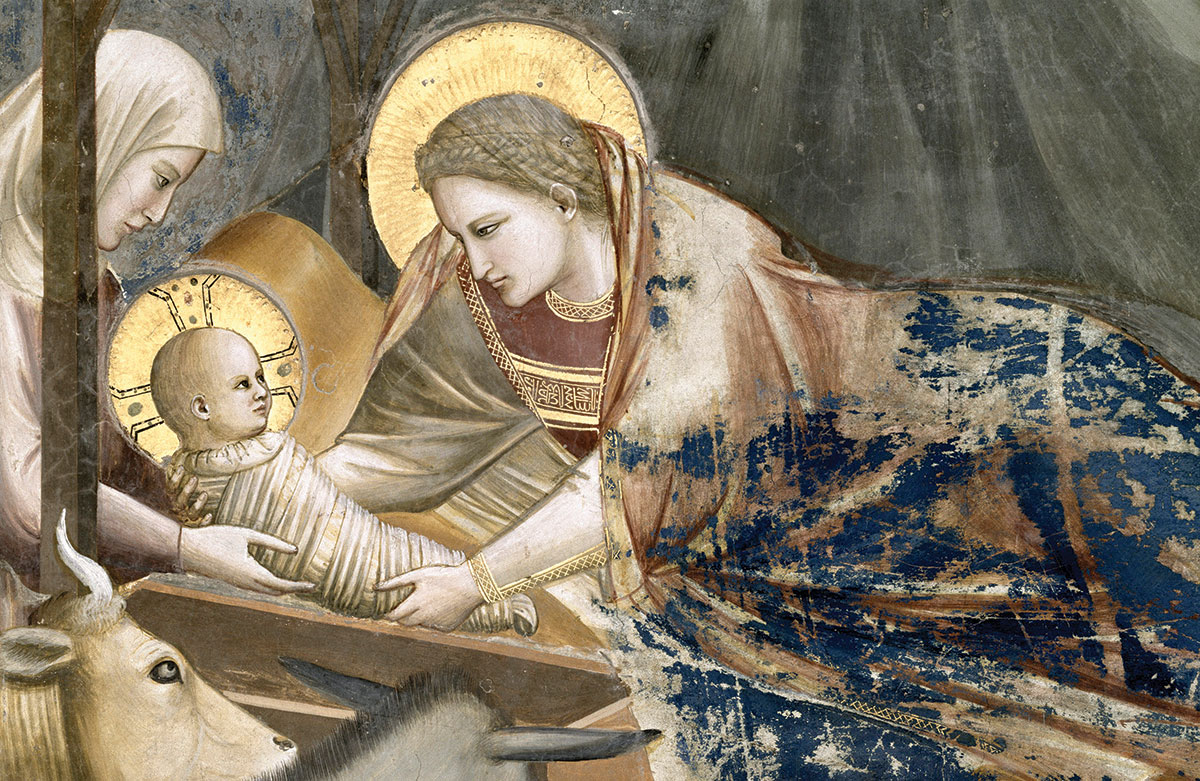
Early Christian Teaching on the Incarnation & Redemption by Patrick Henry Reardon

28.6—Nov/Dec 2015
on the Deepest Longings of the Restless & the Lonely by William Graddy
more from the online archives

19.10—December 2006
Training Up a Child Requires a Well-Formed Imagination by David Mills
24.1—January/February 2011
Marriage Thrives in Reality, Not in Our Dreams by Nathan Schlueter
19.8—October 2006
on the Good Father’s Quiet Desperation by Russell D. Moore
calling all readers
Please Donate
"There are magazines worth reading but few worth saving . . . Touchstone is just such a magazine."
—Alice von Hildebrand
"Here we do not concede one square millimeter of territory to falsehood, folly, contemporary sentimentality, or fashion. We speak the truth, and let God be our judge. . . . Touchstone is the one committedly Christian conservative journal."
—Anthony Esolen, Touchstone senior editor
