




Feature
Role Reversals
Sex, Women's Ordination & the Rejection of Hierarchy & Equality
Part I: Fundamental Theological Principles
Is there an irreducible theological connection between women's ordination and ethical normalization of homosexuality? Surprisingly, few attempts have been made to ground arguments here on fundamental theological principles, rather than on empirical evidence and intuition. Consequently, much of the controversy over women's ordination, including its possible relation to sodomy, exists precisely because many Christians do not start from such fundamentals, but instead short-circuit the process of theological reflection by starting at some point further down the line, with consequent errors in their reasoning. The issue can only be addressed by starting from often unarticulated, and hence unexamined, root assumptions, ultimately grounded in how we think about the very being of God, the Trinity, the Incarnation, and our resulting theological anthropology.
Every theological question ultimately is rooted in our received understanding from divine revelation of the nature and being of God himself. One of the most important and unique contributions of Judaism and Christianity, not found previously either in other religions or among ancient philosophers, is the identification of God with Being (existence) itself—the "I AM WHO I AM" (Ex. 3:14)—rather than as a being who merely exists among other existent things. In other words, existence is not a property or predicate of God as it is of created beings; rather, God is uncreated and eternal being, perfect, complete and self-sufficient.
From this conception of God, Christians draw several immediate and fundamental conclusions. First, since God is not an impersonal cosmic operative principle, but a personal being with consciousness and intelligence, Being (existence) itself is fundamentally, ultimately, and irreducibly personal, not impersonal or intellectually abstract. Second, all other existing things—which have their being derivatively and conditionally, as a consequence of being created by the uncreated God who is Being—by virtue of their created status necessarily reflect aspects of God in particular ways to greater or lesser degrees.
Third, since all derivative, contingent, finite created beings reflect aspects of God as original, self-sufficient, and infinite Being, God's creation of the universe is an act of divine self-disclosure, of revelation. Above all, man, by virtue of his singular creation in the image and likeness of God, is uniquely capable of receiving and -comprehending such revelation. Revelation is thus a unique form of knowledge vouchsafed from God to man; although reason, intuition, and the senses can receive and understand revealed knowledge, they are not capable of acquiring and correctly interpreting such knowledge on their own.
Trinity, Hierarchy & Equality
The most fundamental self-disclosure, or revelation, that God makes to man is that of his essentially Triune nature as three Persons—the Father, the Son, and the Holy Ghost. From this, too, Christians draw several immediate and fundamental conclusions. First, God as Being is essentially a complex and not a simple unity. He is not simple Being but Being-in-relation. To put it a bit differently, a person, as distinct from other entities, is by definition a being with capacities for consciousness and intelligence who exists in relation to other such beings. Personal relation is eternal and constitutive of God, and thus God is not reducible to an abstract, impersonal cosmic force. (Because God is uncreated and infinite, whereas man is created and finite, interpersonal relation exists within the one Being of the triune God, instead of between distinct creaturely beings.) Second, to be personal is to be particular and specific, not diffuse and generic. (The fundamental error of pantheism and panentheism is to deny the truly personal nature of God.)
Third, and especially important for the entire following argument, personal relations as particular and specific are ordered in nature. Personal relations have an essential, irreducible, and unalterable structure, pattern, purpose, meaning, and significance. The relations between the Father, the Son, and the Holy Ghost, and their actions as one God within the triune unity, are never random, accidental, arbitrary, insignificant, or interchangeable.
The revealed specific relations between the Father, the Son, and the Holy Ghost show us that those relations are simultaneously ones of equality and hierarchy. In contrast to assumptions in modern secular political and social thought, these two characteristics are not contradictory or mutually exclusive. Per the language of the Athanasian Creed, the Father, the Son, and the Holy Ghost are all equally God, sharing all the same essential attributes, and yet God is also one God, as a complex rather than a simple unity. The divinity of the Son and the Holy Ghost is not in any way inferior to that of the Father. And yet, within the one God, the Son is begotten of the Father, and the Holy Ghost proceeds from the Father through the Son. The Father is the arche, or foundational and originative principle (in a logical but not chronological sense), of the Trinitarian Persons and their relations. The Son is obedient and submissive to the Father; the Holy Ghost acts at the behest of the Father and the Son; and yet their interactive constitutive unity (perichoresis or "coinherence") is that of three equal Persons in perfect harmony of existence, thought, will, and action.
An analogy will illustrate this more clearly. Consider the ordered sequence of numerals 1, 2, 3, and so forth. The numeral 1 comes in sequence before the numeral 2, and 2 likewise before 3; and 2 and 3 are simple multiples of 1 and in that sense dependent on it. In sequence, 1 is thus superior to 2, and 2 to 3; but in quantity, 3 is greater than 2, and 2 greater than 1. And yet it would be absurd to say that 1 is somehow a "better" number than 2 because it comes first in sequence, or that 2 is a "better" number than 1 because it is double the quantity.
Equally important, the order is not interchangeable. Just as numerical order cannot be arbitrarily re-arranged to 3, 1, 2 or 2, 1, 3 or 2, 3, 1, or any other sequence, so likewise the Father cannot be begotten of the Son, and neither the Father nor the Son can proceed from the Holy Ghost. The same also applies to the constitutive elements of the order; just as 3 cannot be arbitrarily substituted for 2 or 1, or 2 substituted for 3 or 1, so likewise the Son cannot be interchanged with the Father or the Holy Ghost, or the Holy Ghost with the Father or the Son. Hierarchy and equality exist in perfect harmony.
The intra-Trinitarian ordered relations of the three divine Persons subsisting as one God, in hierarchy and equality, are revealed as being essentially and fundamentally relations of love—specifically agape, and not eros (sexual or romantic passion) or philia (brotherly affection). A brief definition of agape is: self-sacrificial obedience to God for the greatest good of another. Note the three key aspects: self-sacrifice, obedience, and selflessness. Agape is a free giving of oneself as a person to and for another person, at cost to and without regard for self. Thus, as St. Paul tells us (Phil. 2:5–8), the Son laid aside his divine glory, assumed the form of a man, and humbled himself to become obedient to the Father in the self-sacrificial death of the Cross. All true agape follows the pattern the Son has given us in the Incarnation and Atonement. Likewise, as St. Paul again states (1 Cor. 13:4–7), agape is longsuffering, kind, without envy, does not exalt or magnify itself, does not behave in an unseemly manner, is not self-seekingor easily provoked, does not think of evil or rejoice in iniquity, but rejoices in the truth, and thus bears, believes, hopes, and endures all things.
There is of course a profound difference in how agape is realized within the Trinity, and how it is realized in God's relations to his creatures and in man's relations to God and to his fellow man. God acts in perfect self-consistency with his own essence and nature as perfect Being; he has no potentialities, but always fully realizes all of his properties, including agape, which is his most foundational property, the very essence of his interpersonal Trinitarian relations. By contrast, man's realization of agape is a finite, creaturely imitation of the divine pattern, only potentially realizable and (due to the Fall) imperfectly realized. Also, since human persons as distinct finite creatures do not have the Trinitarian perichoresis with one another, they do not enjoy the perfect and infinite interpersonal intimacy found only in God.
Incarnation & Creation of Man
Agape is most fully revealed—indeed literally embodied—in the Incarnation. Man was originally created in the image and likeness of God. The two are distinct in that the image is the essential and irreducible finite correspondence of the nature of man to God, whereas the likeness is the potentiality of man to manifest that image within the bounds of creaturely finitude. With the Fall, the likeness was grievously marred, though the image remained intact. The Fall ruptured the perfect correspondence of likeness to image in man's being, resulting in a loss of innocence and holiness. Since the perfect holiness of God by nature cannot abide the presence of lost or marred holiness, the bond between God and man was necessarily also impaired, to the point that man suffers death as the wages of sin.
In the Incarnation, God the Son assumed the fullness of original unimpaired human nature as it was before the Fall, and then suffered temptation in all things unto death, in order that by perfect, selfless, self-sacrificial obedience, he might provide to man that greatest good which fallen man could not gain for himself—complete restoration of the original finite creaturely likeness to the image of the Father. In the harmonious union by the Incarnation of two natures, divine and human, in one Person, the God-man Jesus Christ, one therefore also finds manifested the Trinitarian principles of hierarchy and equality. The Second Person of the Trinity, God of God, is infinitely superior to the mortal creature, yet makes himself at one with that creature in assuming its finite and mortal nature, by self-sacrificial agape, that it might be restored to immortality.
In the creation, God made man as both male and female. As originally created before the Fall, every single human person, whether male or female, bears the complete image and likeness of God. Male and female are thus not disjunctive halves of the image and likeness. Likewise, contrary to both ancient Gnosticism and the modern secular fiction of androgyny (fallaciously drawn, as C. S. Lewis notes, from false egalitarian notions of political equality and democracy), human persons are not neuter souls indwelling biologically differentiated bodies. Rather, human souls also are created as male and female. They are united to and animate correspondingly male and female bodies, whose sexually differentiated and complementary natures reflect, in finite creaturely forms, the triune personal relations within the Godhead—the harmonious inter-working of hierarchy (male) with equality (female).
Man and woman are respectively embodied signs of male and female; male and female in turn are creaturely spiritual principles that respectively signify the divine principles of hierarchy and equality in the interpersonal relations of the triune God. The more truly masculine a man is, and the more truly feminine a woman is, the more fully does the creaturely likeness approach and finitely realize the divine image.
Signs & Signification: Male & Female
A Christian understanding of signs and symbols is crucial here. (Although "sign" and "symbol" are often used interchangeably, and for convenience will be so used here, strictly speaking a sign is a particular event or act, whereas a symbol is a particular object.) A sign points forward or backward to that which it signifies. But signs of human devising have only an arbitrary relation to that which they signify; since the link is purely conceptual, the relation between sign and thing signified can be changed or broken at will. Divinely created signs, however, have an essential relation to the things signified, which is not merely conceptual but inherent in the divinely created order, and thus cannot be altered or broken. To put it a bit differently, a human sign makes what is signified present only conceptually; a divine sign (e.g., the Eucharist), by contrast, makes what is signified present effectually as well—representing it in the original literal sense of "re-presenting" it or making it present again.
The essential ordered relation between sign and thing signified also means that the capacity to signify entails the capacity to create and assert hierarchical relations. The naming of the animals by Adam was an act of signification that asserted the superiority of Adam to the beasts. Likewise, the chief thrust of the second commandment is not to forbid the existence of any images of God, but rather to prohibit man from making false images in contrast to divinely given true images. This is above all true of the revealed names of God. "Father," "Son," and "Holy Ghost" are not similes, nor even metaphors, but the proper names of the divine Persons of the Trinity, which signify to us their true natures and relations. The divine revelation and gift to man of these proper names as true images likewise signify the absolute hierarchical subjection of man as creature to the headship of God as creator.
The relation of man to woman, who signify in living forms the divinely created principles of male and female that in turn manifest the divine triune relations of hierarchy and equality, is one such unalterable symbolic relation, because it signifies the relation of Christ to his Church. It is in the Church that the principles of the Incarnation—God made man—and of man and woman—complementary persons made in the image and likeness of God—are brought together. As a living sign to the world, the Church is not a voluntary association of like-minded individuals; it is a divinely created organic unity of persons in ordered relations of hierarchy and equality. The union of man and woman as husband and wife signifies the mystery of the union of Christ and his Church in such ordered relations (and thus every Christian married couple is a microcosm of the Church).
As St. Paul states, the relation of Christ to his Church, and hence of male to female within it, is that of headship and submission—in short, one of hierarchy (Eph. 5:22–33). And yet St. Paul also states that in the Church the salvific relation between its members, conferred by baptism, is neither male nor female, nor Jew nor Greek, nor slave nor free—in short, is one of equality (Gal. 3:27–29). Both principles—hierarchy and equality—are fully present and operative in the Church, and when rightly understood and applied, they cannot contradict each other.
Thus, the hierarchic relation of male headship to female submission cannot be one of dominance to subjugation that violates the principle of salvific equality, and the relation of equality cannot be one of undifferentiated egalitarianism that denies the principle of hierarchic relation. Instead, as reflective of the ordered relations within the Trinity, the relation of headship to subjection, of male to female, is one of initiative to response—of self-sacrificial service by the head in union with the consenting and enabling cooperation and support of the subject, each selflessly seeking the greatest good of the other.
The Ordained Ministry as Sign of the Church
The ordering of the ordained ministry and the laity within the Church likewise embodies and manifests the principles of hierarchy and equality, and of headship and submission within hierarchy. Although the entire people of Old Testament Israel, as the type to the New Testament Church as antitype, was in one sense collectively a priesthood (Ex. 19:6; Is. 61:6), God still set apart the tribe of Levi as -having the sole right to offer tabernacle and temple sacrifice and to handle the Ark of the Covenant, and he destroyed those who rebelled against or violated this order (Num. 16; 2 Sam. 6:7). Likewise, in the New Testament Church, all the baptized are in one sense a priesthood (1 Peter 2:5,9), yet there is also a diversity of offices and ministrations according to the gifts of the Spirit (Rom. 12:6–8; 1 Cor. 12; Eph. 4:11–12).
In particular, the ordained minister does not just do things, such as preach and celebrate Holy Communion. Rather, and far more importantly, he is something—a living sign, an "icon" or "image" of Christ to the Church, just as Christ as the Incarnate Son is the divinely given image of God to man (Heb. 1:3), and the husband is the image of God to his wife and children in marriage and the family. The divinely constituted ordering of the minister to the congregation is thus inherently and specifically one of male-to-female relation.
By virtue of being set apart through the laying on of hands, the minister signifies headship and authority—of God the Son as Lord of all, of Christ as groom over the Church as his bride, of the man over the woman, of hierarchy rather than equality. While the official actions he performs manifest this office of iconic headship in particular ways, they do not constitute it; instead, it is precisely his iconic maleness that does so. However, as a counter-balance against self-assertion, an individual man does not autonomously discern a vocation to ordination; rather, the Church calls and examines him for a vocation to that office, and can deprive him of its exercise as well.
Essentialism & Functionalism
The Christian concept of icons—man as an icon of God, the ordained minister as an icon of Christ—is grounded upon an underlying concept that I will term essentialism. This concept holds that each type of thing is what it is by virtue of having a unique constitutive principle or essence—uncreated and eternal in God, created and implanted by him in all created things. This essence both endows that type of thing with an inherent and ineradicable value, and intrinsically determines its capacities and relations to other things, and thus orders them all to their proper goals or ends.
Every created thing is constituted of an irreducible and unalterable essence, to which non-essential and alterable properties or "accidents" are conjoined. In Aristotle's classic example, man is the rational animal; whereas reason is the essential constitutive feature, a man can also be hairy or bald, light or dark in complexion, tall or short in stature, and so on, and he can undergo changes in these properties without his rationality being affected. (By contrast, God, as uncreated and immutable being, is pure essence and actuality; he has no accidents or unrealized potentialities for change.)
In opposition to this, the modern secular concept of functionalism denies the existence of any such inherent and irreducible essence, and hence of any intrinsic ontological or teleological character to things. Instead, it asserts that a thing is nothing more than the sum of its parts and capacities for action or uses at a given moment, a particular collection of accidents which man chooses to conceptualize as a unity and to assign a
name to.
Thus, for a Christian, "nature" exists in two senses: the composition and events of the created physical order on the one hand, and the composition and events of the created moral and spiritual order on the other. An action or event can be "unnatural" by virtue of violating God's divinely created order in either sense; through the Fall, man as made in the image and likeness of God is the sole earthly creature capable of willful unnatural action.
For the secularist, however, nature exists only in the former sense; for him, all things and relations are wholly reducible to their material composition and capacities for action or use. And since he also rejects belief in the Fall, the secularist believes that the only "unnatural" things are those which are physically impossible and contravene self-existent "laws of nature."
It is no accident that modern secular philosophies such as Marxism and deconstructionism, and supporters of such measures as abortion and euthanasia, view human persons not in essentialist terms of inherent and irreducible value, but rather in functionalist terms of usefulness or expendability according to the utilitarian criteria of a social cost/benefit analysis. And on the other end of the spectrum, philosophies such as libertarianism and anarchism, which advocate an atomistic individualism, are in the last analysis equally functionalistic, as their assertions of autonomy and self-sufficiency and their denial of positive mutual obligations reject the concept of a divinely constituted hierarchical network of essential natural relations.
Part II: The Logical Union of Women's Ordination & Sodomy
It is now finally possible to explain why support for women's ordination and for legitimization of homosexual conduct are conjoined. Both positions entail, with respect to their particular ends, a common denial of the entire series of Christian principles articulated here. The parallels between the two positions are not merely accidental or coincidental; rather, they are the result of the same mindset and underlying assumptions.
First, both positions deny or reject essentialism in favor of functionalism. Apologists for sodomy deny that there is any underlying significance or purpose to sexual relations as essentially procreative and unitive, which naturally constitutes them and orders their use to those specific ends. Rather, since they can be conceived of and used functionally to obtain other desired results (physical and emotional pleasure), these become ends in themselves, and the means to them is asserted to be "natural" in a reductionist sense.
Likewise, apologists for women's ordination deny that there is any underlying significance or purpose to the ordained ministry as essentially hierarchical and authoritative, which naturally constitutes it and orders its use to that specific end. Rather, since it can be conceived of and used functionally to obtain other desired results (e.g., pastoral care, Bible study, church administration, etc.), these become ends in themselves, and the means to them is asserted to be "natural" in a reductionist sense.
Second, both sets of apologists deny or reject the Christian belief in divine signs, symbols, and signification. For both, there is no belief that created things—whether sexual relations or the ordained ministry—are divinely constituted with any essential power or meaning to signify and point beyond themselves to revealed, eternal divine verities. Instead, all symbols are purely human concepts which may be created, altered, and discarded at will, since their signifying power and meaning are determined by man (not God) to satisfy human desires and needs.
Rejecting belief in the Fall, apologists for sodomy see all sexual relations as fundamentally identical, fulfilling and even immediately signifying eros, but not agape. Apologists for women's ordination see all forms of ministry as fundamentally identical and egalitarian, fulfilling and even immediately signifying agape, but not iconic hierarchical headship and authority.
Third, both implicitly deny or reject the particular Christian hierarchical principle of the relation of headship to submission—of man to woman, of Christ to the Church, of the Creator to the creation. Apologists for sodomy reject the necessity of male-female complementarity as a principle governing sexual relations, in favor of pairing two like things (two persons of the same sex). Since such efforts to contravene the natural order are ultimately futile, homosexual relations inevitably fall into a perverted reflection of the true principle, with one partner dominant and the other subjugated. However, since both partners are naturally constituted by God to fulfill the same role, the relations are inherently unstable, a factor that underlies the instability, transience, and extra-relational promiscuity of most homosexual partnerships.
Likewise, apologists for women's ordination reject the necessity of the particular complementary male-female principle of headship to submission as governing the ordained ministry, in favor of pairing two like things (a minister whose relation to the congregational body is essentially egalitarian) in a relation that likewise is inherently unstable, as both sides try to fulfill the same roles, and inevitably falls into a perverted reflection of the true principle, with one side dominant and the other subjugated.
The explicit Pauline relation of Christ as the head of the Church to man as the head of the woman (1 Cor. 11:3–12 and Eph. 5:22–33) is severed from and denied to have any relevance to the ordained ministry of the Church. Some egalitarians try to evade this point with a Humpty-Dumpty redefinition of Greek words, asserting "head" (kephale) to mean merely "source," and "submit" (hu-potasso) to mean "serve," with the resulting claims that mutual submission excludes both hierarchy and any authority to headship, and that Christ therefore also submits to the Church as well as the Church to him.
Both apologists for women's ordination and apologists for sodomy subscribe to an egalitarianism that asserts functional interchangeability and denies a hierarchy of divinely ordered relations. The former assert that a woman can substitute for a man as an ordained minister in relation to the congregation; the latter, that a woman can substitute for a man (or vice-versa) as a spouse in a marital relation with another person of the same sex. The proponents of women's ordination who oppose the legitimization of sodomy are in an indefensible position: they assert the existence of a divinely constituted male-female ordering in human personal and social relations that is merely biological, but deny a similar ordering in the Church as the spiritual body comprehending and governing such relations. Their God is not a God of order, but of confusion.
Fourth, as a corollary to the rejection of hierarchy and headship and the assertion of egalitarianism and individualism, both assert an inherent superiority of individual discernment and fulfillment over corporate judgment and welfare. Apologists for sodomy insist that the homosexual has rightly discerned his true orientation. Society cannot tell him that his desires here are fundamentally disordered, and his entitlement to fulfill them outweighs the costs to society. Apologists for women's ordination insist that the female aspirant has rightly discerned her true calling. The Church cannot tell her that her desires here are fundamentally disordered, and her entitlement to fulfill them outweighs the costs to the Church. The Church is thus not a body, which is an organic unity of members in divinely constituted and ordered relations, but rather an atomistic collection of autonomous individuals in voluntary and unilaterally revocable contractual agreements.
Fifth, both deny more generally the fundamental compatibility of equality and hierarchy as divine principles. Hierarchy is reduced to and rejected as being only a system of domination and subjugation, and the concept of equality as a network of complementary relations is rejected in favor of a distorted concept of equality that connotes egalitarianism and interchangeability. This in turn entails a denial of male and female as spiritual principles, which are enfleshed and signified as man and woman. Embracing the heresy that S. M. Hutchens aptly terms "anthropological modalism," this position considers persons to be essentially androgynous and only incidentally sexed. For both sets of apologists, the sex of the person who fills the respective office—sexual partner or ordained minister—is ultimately accidental, a matter of subjective human taste rather than of objective divine order.
Sixth, as the culmination of the previous points, both effectively deny that the created order is objectively and meaningfully constituted by divinely ordered relations. The egalitarian rejection of the principle of hierarchy entails rejection of a belief in essentially ordered relations in general (since all ordered relations are by definition hierarchical). Rather, all relations are merely functional and hence provisional, and thus determined by (fallen) man's desires and judgments rather than by divine action and revelation. (Modern theological revisionists attempt to camouflage this by appealing to a latter-day Montanism that claims to be presenting a "prophetic witness" of a new dispensation.)
Ultimately, the rejection of the compatibility and complementarity of the principles of hierarchy and equality entails one of two ends. One must either reject the orthodox understanding of Trinitarian personal relations, and thus the Christian understanding of God himself, or else deny that these relations are in any way signified in the creation of man as male and female, which thus denies the orthodox Christian understanding of man as originally created in the image and likeness of God.
Seventh, a denial of the created order as being constituted by divinely ordered relations, and of those relations as being intrinsic to the triune nature of God, entails denial of revelation as a special, divinely vouchsafed category of objective knowledge, and of the Church as the divinely constituted and appointed guardian of that deposit of knowledge. As Fr. Samuel Edwards has noted, the doctrine of revelation is replaced here by a doctrine of discovery. God's objective disclosure of himself to man as a subject is supplanted by a belief in man's increasing exploration of God as an object—or increasing elaboration of "God" as a concept of human devising.
Eighth and last, the final fruit of support for both women's ordination and "sanctified sodomy" (to borrow William Tighe's term) is the fundamental inversion of divine-human relations. Both the ability and the asserted right to take as a sexual partner a member of one's own sex, or to ordain as a minister a woman rather than a man, presume that it is man and not God who sets the terms. As with inclusive language—the assertion of the right to name God as man desires rather than as God reveals—these are (as with all acts of disobedience) ultimately acts of idolatrous self-worship that seek to conform God to the image and likeness of fallen man.
Two additional points should be noted briefly regarding women's ordination. First, it denies the particularity and significance of the Incarnation. Second, it denies the revealed nature of the Trinity as the Father, the Son, and the Holy Ghost. These two denials are inextricably interrelated. As C. S. Lewis pointed out in his essay "Priestesses in the Church?", if male and female are mere accidents, then God the Son could just as well have assumed human nature as a woman as have assumed it as a man, and one could likewise just as well pray to God the Mother as to God the Father. (Note, too, the rejection of essentialism in favor of functionalism and modalism as expressed in the feminist formula of "Creator, Redeemer, and Sanctifier" to replace the divinely revealed names of Father, Son, and Holy Ghost.)
The feminist theology behind women's ordination and "inclusive language" is thus arguably more profoundly anti-Christian than is the justification of sodomy. For while the latter strikes primarily at the moral order of creation and only secondarily at its theological order, the former strikes directly at the heart of Christian theology and its doctrines regarding the revealed nature and being of God.
Erroneous Counter-Arguments
On what grounds, then, do some otherwise "conservative" or "orthodox" Christians support women's ordination but oppose the legitimization of sodomy? The short answer: incoherent theology. Most attempts to bridge this chasm approach it only on a superficial level and have never really thought it through to the underlying theological principles.
Generally, the apologists for this view inconsistently hold an essentialist view of sex and sexuality, but a merely functionalist view of ordination. While men and women are considered to be essentially distinct and complementary types of human persons, the office of the ordained ministry is in effect viewed as simply an ecclesiastical office to be filled by election or appointment—in short, a "job." As such, it is defined not by any essential relation to Christ as the incarnate Son, and hence through that to man rather than woman, but only by a set of specified tasks and corresponding skills, and thus no different from any other professional white-collar position in society or government. (C. S. Lewis speaks powerfully to this point in his aforementioned essay.)
This view in turn is generally correlated to misconceptions of the nature of the Church and the ordained ministry that derive from strands of modern secular American culture—democracy, individualism, progressivism, and feminism—rather than from Scripture. (It should also be noted that, per Leon Podles, both support for women's ordination and the justification of sodomy are linked to the "feminization of the church," and are particularly strong in socially pathological communities that lack strong male figures and stable intact families with real fathers.)
Among the specific faulty grounds for this position are the following:
First, an erroneous notion of "equality" as meaning simply undifferentiated egalitarianism leads to a false understanding of the "priesthood of all believers," which runs roughshod over Numbers 16 and the distinctions in types of ministries and gifts found in both the Old Testament and in St. Paul's epistles. Some therefore deny that any particular grace is bestowed in ordination, because it would appear to make the ordained minister different and thus in some sense "better" than the layman. This denial again rests upon the modern secular rejection of the Trinitarian principle of the compatibility of hierarchy and equality.
Others go so far as to deny that the ordained ministry should have any aspect of headship and authority at all, asserting such to be incompatible with the ministry as an office of service and humility. This simply reproduces in a different form the fallacy of hierarchy and equality as being incompatible; as Jesus of Nazareth, the Son of God incarnate, Christ had no problem combining headship and authority with service and humility.
Second, these erroneous notions and denials are generally coupled with equally grave misconceptions of the nature of the Church and of the gifts of the Spirit in relation to that. St. Paul speaks of the Church as the Body of Christ, an organism with members (limbs and organs) set in ordered relation to one another (1 Cor. 12). Persons are drawn to Christ in and through the Church; they become members thereof, and receive spiritual gifts through it in order to serve it. The correct order of relation is Christ—Church—Member.
However, the false understanding of the "priesthood of all believers," conjoined to the extreme emphasis in modern American culture on individualism, erroneously inverts the order of relation to Christ—Member—Church. Each person first establishes an individual relationship with Christ; the Church only subsequently comes about as a voluntary association of like-minded believers, a spiritual mutual aid society that is useful but not essential to salvation. (Hence the "just me, Jesus, and my Bible" outlook of both modern Evangelicalism and liberal theological revisionism—although the latter often discards "Jesus and my Bible" as well.)
The resulting concept of the Church is mechanistic (assembled from discrete independent units), not organic (generated by an organism with inter-dependent organs), and thus functionalist rather than essentialist in nature. Spiritual gifts are thus correspondingly seen as given primarily to the individual and only secondarily to the Church. The result is that the individual and not the Church purports to discern a calling to the ministry; and if the Church fails to recognize the individual's calling, then the Church is presumed to be in error and to be denying the gifts of the Spirit.
As with modern distortions of the principle of sola Scriptura, the individual believer thus stands in judgment of the Church. And if the individual can judge the Church to be wrong on one point (the nature of the ordained ministry and a calling thereto), then there is no reason to believe he cannot do so on any other point (the nature of proper sexual relations). In short, the individual believer usurps the place of Christ as the head of the Church.
Third, the rejection of the ancient and Pauline organic concept of the Church for the modern and secular mechanistic concept also entails a corresponding rejection of paradosis—"tradition" as an inheritance to be received, handed down, and preserved intact from one generation to another (2 Thess. 2:15; 3:6; 1 Peter 1:18; Jude 3). Instead, and in line with a functionalist outlook, all traditions (like all images) are assumed to be of human fabrication (Mark 7:1–13), and none of divine creation; hence, they are only of utilitarian value at best and subject to being discarded at will. Rather than being conformed to the image and likeness of God, the Church is to be conformed to the image and likeness of contemporary society.
Fourth, one should not underestimate the sheer amount of envy, jealousy, and pride underlying these views. A great paradox of American culture is the simultaneous assertion of an egalitarian notion of equality—that all persons are fundamentally the same, such that no one stands out from anyone else—and an atomistic view of individuality—that each person is absolutely unique, such that every person stands out from everyone else. "We're all alike, so I'm as good as anyone else" is combined with "I'm special and no one else is like me."
On the proper Christian understanding of the compatibility of equality and hierarchy in divinely ordered relations, no problem exists here. But when (as in modern secular culture) this principle is perverted—when equality is corrupted into sheer egalitarianism, hierarchy is debased into mere functional differentiation, and divinely ordered relations are ignored or denied—the two extremes become irreconcilable. The result is internecine spiritual warfare, with every person making a false pretense at humility while asserting equality to his superiors and superiority to his equals.
Conclusion
Rather than confront these inconsistencies and flaws in their thoughts and the unacknowledged compromises they have made with modern secular culture, those who oppose "sanctified sodomy" but support women's ordination fall back upon ad hoc prooftexting of scriptural verses (most famously Gal. 3:28 as applying to ordination rather than to salvation through baptism into Christ) and a manner of reading Scripture akin to literalist "propositional revelation." Of course, their revisionist opponents employ a virtually identical method, simply employing different initial assumptions to obtain different results.
In conclusion, neither women's ordination nor the legitimization of homosexual conduct are issues of "equality and justice" in the modern secular and politically egalitarian sense advocated by their proponents. Instead, both constitute fundamental assaults on the divinely established ordered relations within creation and the entire superstructure of orthodox Christian theology—from the Trinity, through the Incarnation, to the Church, and finally to the family as the Church in miniature. These assaults must be repelled and their errors exorcized from the Body of Christ and the mind of every faithful Christian.
James A. Altena is the associate editor of Fanfare magazine, a comprehensive bimonthly periodical for reviews of classical music recordings. He is a member of All Saints Episcopal Church in Wynnewood, Pennsylvania, and is pursuing a Ph.D. in church history at Westminster Theological Seminary in Glenside, Pennsylvania.
A Journal of Mere Christianity—Delivered to Your Door
- Essays on theology, culture, and the Church
- Contributors from across the Christian traditions

Six print issues (one year) of Touchstone, plus full online access and PDF downloads for only $39.95.

Get a one-year full-access subscription to the Touchstone online archives for only $19.95.
bulk subscriptions
Order Touchstone subscriptions in bulk and save $10 per sub! Each subscription includes 6 issues of Touchstone plus full online access to touchstonemag.com—including archives, videos, and pdf downloads of recent issues for only $29.95 each! Great for churches or study groups.
Transactions will be processed on a secure server.
more on ministry from the online archives

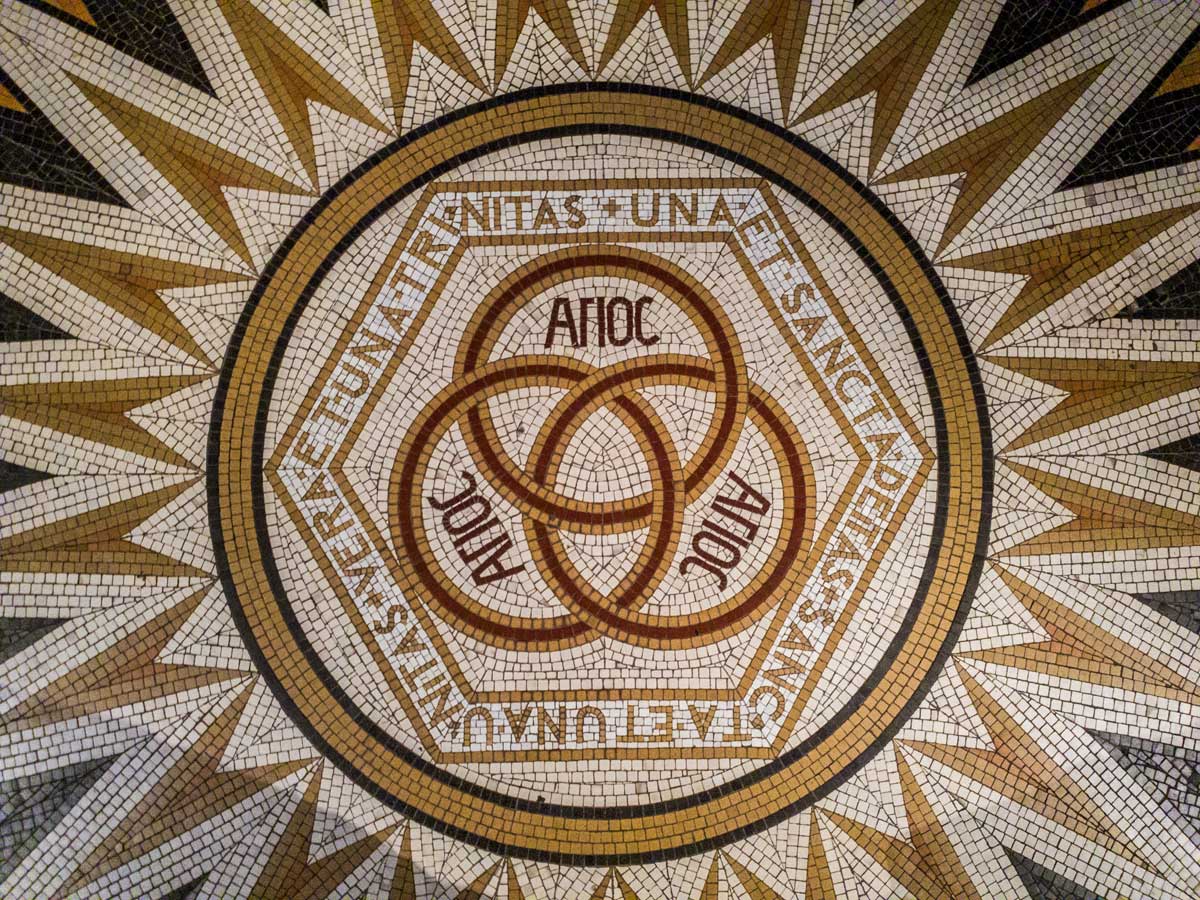
32.1—January/February 2019
Sex, Women's Ordination & the Rejection of Hierarchy & Equality by James A. Altena

more from the online archives
22.8—November/December 2009
on the Real Men Behind the Christmas Carol by Michael Baum

28.2—March/April 2015
Neo-Pagan Family Policies Doom Any Recovery by Allan C. Carlson

33.3—May/June 2020
on the Wisdom of the Good Doctor Edmund Pellegrino by Allen H. Roberts II
calling all readers
Please Donate
"There are magazines worth reading but few worth saving . . . Touchstone is just such a magazine."
—Alice von Hildebrand
"Here we do not concede one square millimeter of territory to falsehood, folly, contemporary sentimentality, or fashion. We speak the truth, and let God be our judge. . . . Touchstone is the one committedly Christian conservative journal."
—Anthony Esolen, Touchstone senior editor
